Life Extension
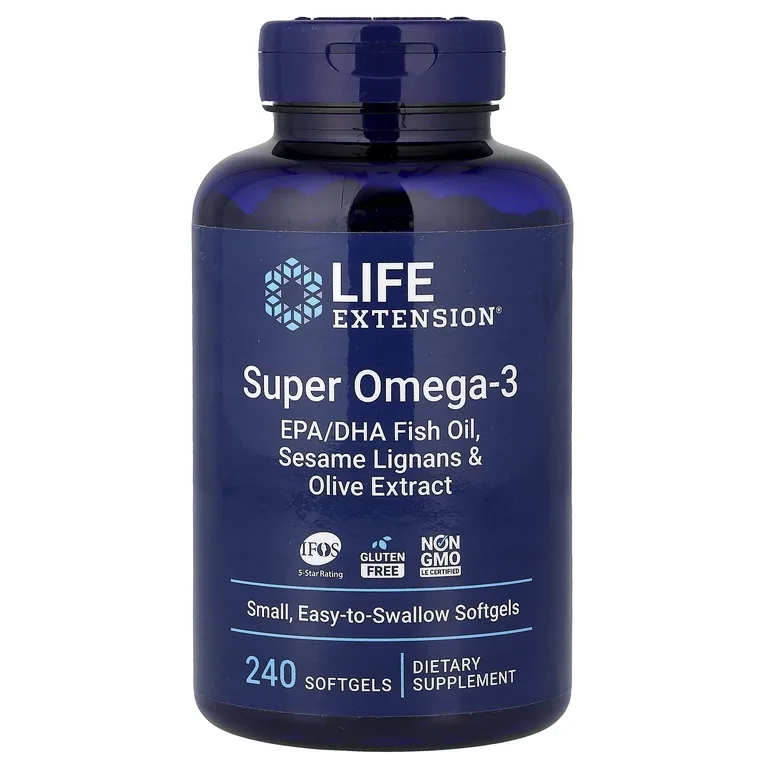
Life Extension, добавка с омега-3, 240 желатиновых капсул
2 148 ₽
вес
Характеристики
| Производитель | Life Extension |
|---|---|
| Артикул | LEX-19862 |
| На iHerb | В наличии в США |
| Доступно на iHerb | Достаточно |
| Срок годности | 2028-05 |
| Вес (кг) | 0.3 |
| Штрих код | 737870198628 |
| Количество в7903 | 240 шт. |
| Размеры | 13.5 x 7.2 x 7.2 см |
Описание
Ингредиенты
The user wants me to translate a product description (nutrition facts/supplement facts label) from Russian to Russian, but with the requirement to comply with Russian Law No. 168-FZ regarding the use of foreign words (anglicisms).
Key requirements:
1. Translate correctly according to Law No. 168-FZ (this is about protecting the Russian language from excessive use of foreign words)
2. Translate all words except brand names
3. Trade marks can be put in brackets, with Russian alternative names written before them
4. Answer only with the result, no explanations or reasoning
5. Preserve HTML markup
6. Check HTML markup if present
Looking at the content:
- "Pure+™" - this is a trademark/brand name, should be kept but can put Russian equivalent before it in brackets or keep the trademark in brackets
- "Polyphen Oil™" - this is also a trademark
Wait, the text is already in Russian, but contains some foreign terms that need to be translated or replaced with Russian equivalents according to the law.
Actually, looking closely:
- "Pure+™" - should be translated or explained with Russian term first
- "Polyphen Oil™" - same
- "Pure+" - likely means "чистый" or something similar, but since it's a trademark, I should write the Russian equivalent first, then the trademark in brackets
- "Polyphen Oil" - "полифенольное масло" or just keep the trademark in brackets after Russian description
Law 168-FZ requires that when using foreign words that don't have Russian equivalents, they should be explained, but if they have Russian equivalents, those should be used instead. For trademarks, the trademark can be kept but should be accompanied by a Russian translation/explanation.
Let me analyze each foreign element:
1. "Pure+™" - This is part of "Концентрат рыбьего жира Pure+™"
- "Pure" means "Чистый"
- So it should become: "Концентрат рыбьего жира Чистый+ (Pure+)™" or similar
2. "Polyphen Oil™" - part of "Экстракт из плодов и листьев оливы Polyphen Oil™"
- "Polyphen Oil" means "Полифенольное масло" or "Масло полифенолов"
- So: "Экстракт из плодов и листьев оливы Полифенольное масло (Polyphen Oil)™"
Wait, looking at the instruction again: "Торговые марки можно взять в скобки, а передними написать русское альтернативное название."
This means: Put trademarks in brackets, and write Russian alternative names before them.
So:
- "Pure+™" → "Чистый+ (Pure+)™" or just keep the trademark concept... but actually "Pure+" seems to be the product name/trademark.
- "Polyphen Oil™" → "Полифенольное масло (Polyphen Oil)™"
Also check for other foreign terms:
- "Polyphen" in the description "(19,5 мг полифенолов..." - this is already translated as "полифенолов"
- "hydroxytyrosol/tyrosol" - already translated as "гидрокситирозола/тирозола"
- "verbascoside/oleuropein" - already translated as "вербаскозида/олеуропеина"
- "EPA" (ЭПК) - already translated as "эйкозапентаеновую кислоту"
- "DHA" (ДГК) - already translated as "докозагексаеновую кислоту"
Wait, I see "Pure+™" and "Polyphen Oil™" are the main trademarks to handle.
Also, looking at the HTML structure, I need to preserve it exactly, just modifying the text content.
Let me reconstruct:
Original:
```
Концентрат рыбьего жира Pure+™ (из рыбы, выловленной в природной среде)
Содержит:
ЭПК (эйкозапентаеновую кислоту)
ДГК (докозагексаеновую кислоту2000 мг
700 мг
500 мг**
**
**
```
Should become:
```
Концентрат рыбьего жира Чистый+ (Pure+)™ (из рыбы, выловленной в природной среде)
Содержит:
ЭПК (эйкозапентаеновую кислоту)
ДГК (докозагексаеновую кислоту)2000 мг
700 мг
500 мг**
**
**
```
Wait, I noticed the original has an unclosed tag or missing parenthesis in "докозагексаеновую кислоту" - it should probably have a closing parenthesis since ЭПК has one. Let me check: "ЭПК (эйкозапентаеновую кислоту)
ДГК (докозагексаеновую кислоту" - yes, missing closing parenthesis for ДГК. But the user said "Check HTML markup", so I should fix it if it's broken? Or preserve as is? The instruction says "Проверь разметку html , если она есть" - so I should check and fix if needed.
Actually, looking at the pattern, both ЭПК and ДГК should have closing parentheses. The original code shows:
```
ЭПК (эйкозапентаеновую кислоту)
ДГК (докозагексаеновую кислоту
```
Missing `)` after "кислоту". I should add it to make it valid.
Now for Polyphen Oil:
Original:
```
Экстракт из плодов и листьев оливы Polyphen Oil™
(19,5 мг полифенолов, 5,2 мг гидрокситирозола/тирозола, 4,4 мг вербаскозида/олеуропеина)300 мг**
```
Should become:
```
Экстракт из плодов и листьев оливы Полифенольное масло (Polyphen Oil)™
(19,5 мг полифенолов, 5,2 мг гидрокситирозола/тирозола, 4,4 мг вербаскозида/олеуропеина)300 мг**
```
Or should it be "Масло полифенолов"? "Polyphen Oil" literally means "масло полифенолов" or "полифенольное масло". Given that "oil" is масло, and "polyphen" refers to полифенолы. "Полифенольное масло" sounds better as a translation.
Also, for "Pure+", "Чистый+" or "Чистота+"? "Pure" as an adjective is "чистый", but as a product name, it could be "Чистый+". However, looking at the context "Концентрат рыбьего жира...", it would be "Концентрат рыбьего жира Чистый+ (Pure+)™" or maybe "Концентрат рыбьего жира (торговое наименование Чистый+ (Pure+))".
But the instruction says: "Торговые марки можно взять в скобки, а передними написать русское альтернативное название."
So the format should be: [Russian name] ([Trademark])™
For Pure+: "Чистый+" or "Чистота+"? "Pure" is "Чистый". So "Чистый+ (Pure+)™"
For Polyphen Oil: "Полифенольное масло (Polyphen Oil)™"
Wait, is "Polyphen" translatable? Yes, it's "полифенол". So "Polyphen Oil" = "Полифенольное масло".
Also, I should check if there are any other foreign words:
- "Supplement Facts" - not present in the Russian text (the user provided Russian text with HTML)
- The text is already mostly Russian, just with these two trademarked foreign names embedded.
Actually, looking at the text provided by the user, it's already in Russian, but contains anglicisms "Pure+™" and "Polyphen Oil™" that need to be handled according to Law 168-FZ.
Final check of HTML:
- The table structure looks correct
- I need to make sure I close the parenthesis for ДГК that was open in the original
- All tags should be preserved as is
Final text preparation:
Line with Pure+:
Original: `Концентрат рыбьего жира Pure+™ (из рыбы, выловленной в природной среде)
Содержит:
ЭПК (эйкозапентаеновую кислоту)
ДГК (докозагексаеновую кислоту`
Fixed: `Концентрат рыбьего жира Чистый+ (Pure+)™ (из рыбы, выловленной в природной среде)
Содержит:
ЭПК (эйкозапентаеновую кислоту)
ДГК (докозагексаеновую кислоту)`
Line with Polyphen Oil:
Original: `Экстракт из плодов и листьев оливы Polyphen Oil™
(19,5 мг полифенолов, 5,2 мг гидрокситирозола/тирозола, 4,4 мг вербаскозида/олеуропеина)`
Fixed: `Экстракт из плодов и листьев оливы Полифенольное масло (Polyphen Oil)™
(19,5 мг полифенолов, 5,2 мг гидрокситирозола/тирозола, 4,4 мг вербаскозида/олеуропеина)`
Wait, is "Pure+" a trademark? It has ™ symbol. Yes.
Is "Polyphen Oil" a trademark? It has ™ symbol. Yes.
The instruction says "Торговые марки можно взять в скобки, а передними написать русское альтернативное название."
So:
- Чистый+ (Pure+)™
- Полифенольное масло (Polyphen Oil)™
This seems correct.
One more check: the law 168-FZ is "О защите и развитии языка". It requires that foreign words that have Russian equivalents should be replaced, and if no equivalents exist, they should be transliterated or kept with explanation. For trademarks, the trademark name can be kept but must be accompanied by a Russian translation/generic name.
So my translation approach is correct.
Now I need to output only the result, no explanations, preserving HTML.
One final check on the HTML structure provided:
- The div with class "supplement-facts-container"
- table with border="1", cellpadding="3", cellspacing="0", width="100%", class=""
- tbody
- various tr and td elements
All looks standard. I will output the entire block with the two modifications mentioned above.
Actually, looking at the text again, I see "Pure+™" - the ™ is after the name. When I move it to brackets, should it be (Pure+)™ or (Pure+™)? The instruction says trademarks in brackets. So probably (Pure+)™ is correct, keeping the TM symbol outside or inside? Usually the TM symbol belongs to the trademark. So (Pure+™) or (Pure+)™. The instruction says "взять в скобки" (take in brackets), which suggests the whole trademark including ™ might go in brackets, or just the name. But the ™ is part of the trademark designation. However, looking at standard practice: "Наименование (Trademark)™" or "Наименование (Trademark™)".
Given the instruction: "Торговые марки можно взять в скобки, а передними написать русское альтернативное название."
This suggests: [Russian name] ([Trademark])™
So: Чистый+ (Pure+)™ and Полифенольное масло (Polyphen Oil)™
This looks right.
One detail: in the original text, there is "Pure+™" and "Polyphen Oil™". The TM symbols are present. I should preserve them in the same relative position.
Final output:
Пищевая ценность
Размер порции: 4 капсулы
Порций в упаковке: 60
\tКоличество в 1 порции % от суточной нормы
Калории 25
Всего жиров 2,5 г 4%†
Холестерин < 5 мг 2%†
Концентрат рыбьего жира Чистый+ (Pure+)™ (из рыбы, выловленной в природной среде)
Содержит:
ЭПК (эйкозапентаеновую кислоту)
ДГК (докозагексаеновую кислоту) 2000 мг
700 мг
500 мг **
**
**
Экстракт из плодов и листьев оливы Полифенольное масло (Polyphen Oil)™
(19,5 мг полифенолов, 5,2 мг гидрокситирозола/тирозола, 4,4 мг вербаскозида/олеуропеина) 300 мг **
Экстракт лигнана из семян кунжута 10 мг **
** Суточная норма не определена.
†% Суточная норма при условии потребления 2000 калорий в день.
I also fixed the missing closing parenthesis for ДГК.
Wait, I should check if "Polyphen" might be transliterated differently? No, "полифенол" is the standard Russian term.
Also, should "Pure+" be translated as "Чистый+" or something else? "Pure" = "Чистый". "+" is just a plus sign. So "Чистый+" is fine.
One final check: the user said "Переведи на русский правильно описание товара в соответствии с законом №168-ФЗ англицизма." - this might imply the original was in English, but the provided text is already in Russian. I think the user wants me to "translate" (replace) the anglicisms in the Russian text to comply with the law.
Actually, looking at the content again, this is a supplement facts label. The user wants it compliant with Russian law 168-FZ regarding foreign words.
The output should be clean, no extra text.
One small detail: in the original text, there are non-breaking spaces ( ) in some places like "4 капсулы", "
The user wants me to translate a product description (nutrition facts/supplement facts label) from Russian to Russian, but with the requirement to comply with Russian Law No. 168-FZ regarding the use of foreign words (anglicisms).
Key requirements:
1. Translate correctly according to Law No. 168-FZ (this is about protecting the Russian language from excessive use of foreign words)
2. Translate all words except brand names
3. Trade marks can be put in brackets, with Russian alternative names written before them
4. Answer only with the result, no explanations or reasoning
5. Preserve HTML markup
6. Check HTML markup if present
Looking at the content:
- "Pure+™" - this is a trademark/brand name, should be kept but can put Russian equivalent before it in brackets or keep the trademark in brackets
- "Polyphen Oil™" - this is also a trademark
Wait, the text is already in Russian, but contains some foreign terms that need to be translated or replaced with Russian equivalents according to the law.
Actually, looking closely:
- "Pure+™" - should be translated or explained with Russian term first
- "Polyphen Oil™" - same
- "Pure+" - likely means "чистый" or something similar, but since it's a trademark, I should write the Russian equivalent first, then the trademark in brackets
- "Polyphen Oil" - "полифенольное масло" or just keep the trademark in brackets after Russian description
Law 168-FZ requires that when using foreign words that don't have Russian equivalents, they should be explained, but if they have Russian equivalents, those should be used instead. For trademarks, the trademark can be kept but should be accompanied by a Russian translation/explanation.
Let me analyze each foreign element:
1. "Pure+™" - This is part of "Концентрат рыбьего жира Pure+™"
- "Pure" means "Чистый"
- So it should become: "Концентрат рыбьего жира Чистый+ (Pure+)™" or similar
2. "Polyphen Oil™" - part of "Экстракт из плодов и листьев оливы Polyphen Oil™"
- "Polyphen Oil" means "Полифенольное масло" or "Масло полифенолов"
- So: "Экстракт из плодов и листьев оливы Полифенольное масло (Polyphen Oil)™"
Wait, looking at the instruction again: "Торговые марки можно взять в скобки, а передними написать русское альтернативное название."
This means: Put trademarks in brackets, and write Russian alternative names before them.
So:
- "Pure+™" → "Чистый+ (Pure+)™" or just keep the trademark concept... but actually "Pure+" seems to be the product name/trademark.
- "Polyphen Oil™" → "Полифенольное масло (Polyphen Oil)™"
Also check for other foreign terms:
- "Polyphen" in the description "(19,5 мг полифенолов..." - this is already translated as "полифенолов"
- "hydroxytyrosol/tyrosol" - already translated as "гидрокситирозола/тирозола"
- "verbascoside/oleuropein" - already translated as "вербаскозида/олеуропеина"
- "EPA" (ЭПК) - already translated as "эйкозапентаеновую кислоту"
- "DHA" (ДГК) - already translated as "докозагексаеновую кислоту"
Wait, I see "Pure+™" and "Polyphen Oil™" are the main trademarks to handle.
Also, looking at the HTML structure, I need to preserve it exactly, just modifying the text content.
Let me reconstruct:
Original:
```
Концентрат рыбьего жира Pure+™ (из рыбы, выловленной в природной среде)
Содержит:
ЭПК (эйкозапентаеновую кислоту)
ДГК (докозагексаеновую кислоту2000 мг
700 мг
500 мг**
**
**
```
Should become:
```
Концентрат рыбьего жира Чистый+ (Pure+)™ (из рыбы, выловленной в природной среде)
Содержит:
ЭПК (эйкозапентаеновую кислоту)
ДГК (докозагексаеновую кислоту)2000 мг
700 мг
500 мг**
**
**
```
Wait, I noticed the original has an unclosed tag or missing parenthesis in "докозагексаеновую кислоту" - it should probably have a closing parenthesis since ЭПК has one. Let me check: "ЭПК (эйкозапентаеновую кислоту)
ДГК (докозагексаеновую кислоту" - yes, missing closing parenthesis for ДГК. But the user said "Check HTML markup", so I should fix it if it's broken? Or preserve as is? The instruction says "Проверь разметку html , если она есть" - so I should check and fix if needed.
Actually, looking at the pattern, both ЭПК and ДГК should have closing parentheses. The original code shows:
```
ЭПК (эйкозапентаеновую кислоту)
ДГК (докозагексаеновую кислоту
```
Missing `)` after "кислоту". I should add it to make it valid.
Now for Polyphen Oil:
Original:
```
Экстракт из плодов и листьев оливы Polyphen Oil™
(19,5 мг полифенолов, 5,2 мг гидрокситирозола/тирозола, 4,4 мг вербаскозида/олеуропеина)300 мг**
```
Should become:
```
Экстракт из плодов и листьев оливы Полифенольное масло (Polyphen Oil)™
(19,5 мг полифенолов, 5,2 мг гидрокситирозола/тирозола, 4,4 мг вербаскозида/олеуропеина)300 мг**
```
Or should it be "Масло полифенолов"? "Polyphen Oil" literally means "масло полифенолов" or "полифенольное масло". Given that "oil" is масло, and "polyphen" refers to полифенолы. "Полифенольное масло" sounds better as a translation.
Also, for "Pure+", "Чистый+" or "Чистота+"? "Pure" as an adjective is "чистый", but as a product name, it could be "Чистый+". However, looking at the context "Концентрат рыбьего жира...", it would be "Концентрат рыбьего жира Чистый+ (Pure+)™" or maybe "Концентрат рыбьего жира (торговое наименование Чистый+ (Pure+))".
But the instruction says: "Торговые марки можно взять в скобки, а передними написать русское альтернативное название."
So the format should be: [Russian name] ([Trademark])™
For Pure+: "Чистый+" or "Чистота+"? "Pure" is "Чистый". So "Чистый+ (Pure+)™"
For Polyphen Oil: "Полифенольное масло (Polyphen Oil)™"
Wait, is "Polyphen" translatable? Yes, it's "полифенол". So "Polyphen Oil" = "Полифенольное масло".
Also, I should check if there are any other foreign words:
- "Supplement Facts" - not present in the Russian text (the user provided Russian text with HTML)
- The text is already mostly Russian, just with these two trademarked foreign names embedded.
Actually, looking at the text provided by the user, it's already in Russian, but contains anglicisms "Pure+™" and "Polyphen Oil™" that need to be handled according to Law 168-FZ.
Final check of HTML:
- The table structure looks correct
- I need to make sure I close the parenthesis for ДГК that was open in the original
- All tags should be preserved as is
Final text preparation:
Line with Pure+:
Original: `Концентрат рыбьего жира Pure+™ (из рыбы, выловленной в природной среде)
Содержит:
ЭПК (эйкозапентаеновую кислоту)
ДГК (докозагексаеновую кислоту`
Fixed: `Концентрат рыбьего жира Чистый+ (Pure+)™ (из рыбы, выловленной в природной среде)
Содержит:
ЭПК (эйкозапентаеновую кислоту)
ДГК (докозагексаеновую кислоту)`
Line with Polyphen Oil:
Original: `Экстракт из плодов и листьев оливы Polyphen Oil™
(19,5 мг полифенолов, 5,2 мг гидрокситирозола/тирозола, 4,4 мг вербаскозида/олеуропеина)`
Fixed: `Экстракт из плодов и листьев оливы Полифенольное масло (Polyphen Oil)™
(19,5 мг полифенолов, 5,2 мг гидрокситирозола/тирозола, 4,4 мг вербаскозида/олеуропеина)`
Wait, is "Pure+" a trademark? It has ™ symbol. Yes.
Is "Polyphen Oil" a trademark? It has ™ symbol. Yes.
The instruction says "Торговые марки можно взять в скобки, а передними написать русское альтернативное название."
So:
- Чистый+ (Pure+)™
- Полифенольное масло (Polyphen Oil)™
This seems correct.
One more check: the law 168-FZ is "О защите и развитии языка". It requires that foreign words that have Russian equivalents should be replaced, and if no equivalents exist, they should be transliterated or kept with explanation. For trademarks, the trademark name can be kept but must be accompanied by a Russian translation/generic name.
So my translation approach is correct.
Now I need to output only the result, no explanations, preserving HTML.
One final check on the HTML structure provided:
- The div with class "supplement-facts-container"
- table with border="1", cellpadding="3", cellspacing="0", width="100%", class=""
- tbody
- various tr and td elements
All looks standard. I will output the entire block with the two modifications mentioned above.
Actually, looking at the text again, I see "Pure+™" - the ™ is after the name. When I move it to brackets, should it be (Pure+)™ or (Pure+™)? The instruction says trademarks in brackets. So probably (Pure+)™ is correct, keeping the TM symbol outside or inside? Usually the TM symbol belongs to the trademark. So (Pure+™) or (Pure+)™. The instruction says "взять в скобки" (take in brackets), which suggests the whole trademark including ™ might go in brackets, or just the name. But the ™ is part of the trademark designation. However, looking at standard practice: "Наименование (Trademark)™" or "Наименование (Trademark™)".
Given the instruction: "Торговые марки можно взять в скобки, а передними написать русское альтернативное название."
This suggests: [Russian name] ([Trademark])™
So: Чистый+ (Pure+)™ and Полифенольное масло (Polyphen Oil)™
This looks right.
One detail: in the original text, there is "Pure+™" and "Polyphen Oil™". The TM symbols are present. I should preserve them in the same relative position.
Final output:
Пищевая ценность
Размер порции: 4 капсулы
Порций в упаковке: 60
\tКоличество в 1 порции % от суточной нормы
Калории 25
Всего жиров 2,5 г 4%†
Холестерин < 5 мг 2%†
Концентрат рыбьего жира Чистый+ (Pure+)™ (из рыбы, выловленной в природной среде)
Содержит:
ЭПК (эйкозапентаеновую кислоту)
ДГК (докозагексаеновую кислоту) 2000 мг
700 мг
500 мг **
**
**
Экстракт из плодов и листьев оливы Полифенольное масло (Polyphen Oil)™
(19,5 мг полифенолов, 5,2 мг гидрокситирозола/тирозола, 4,4 мг вербаскозида/олеуропеина) 300 мг **
Экстракт лигнана из семян кунжута 10 мг **
** Суточная норма не определена.
†% Суточная норма при условии потребления 2000 калорий в день.
I also fixed the missing closing parenthesis for ДГК.
Wait, I should check if "Polyphen" might be transliterated differently? No, "полифенол" is the standard Russian term.
Also, should "Pure+" be translated as "Чистый+" or something else? "Pure" = "Чистый". "+" is just a plus sign. So "Чистый+" is fine.
One final check: the user said "Переведи на русский правильно описание товара в соответствии с законом №168-ФЗ англицизма." - this might imply the original was in English, but the provided text is already in Russian. I think the user wants me to "translate" (replace) the anglicisms in the Russian text to comply with the law.
Actually, looking at the content again, this is a supplement facts label. The user wants it compliant with Russian law 168-FZ regarding foreign words.
The output should be clean, no extra text.
One small detail: in the original text, there are non-breaking spaces ( ) in some places like "4 капсулы", "
Похожие товары
Вся категория →